
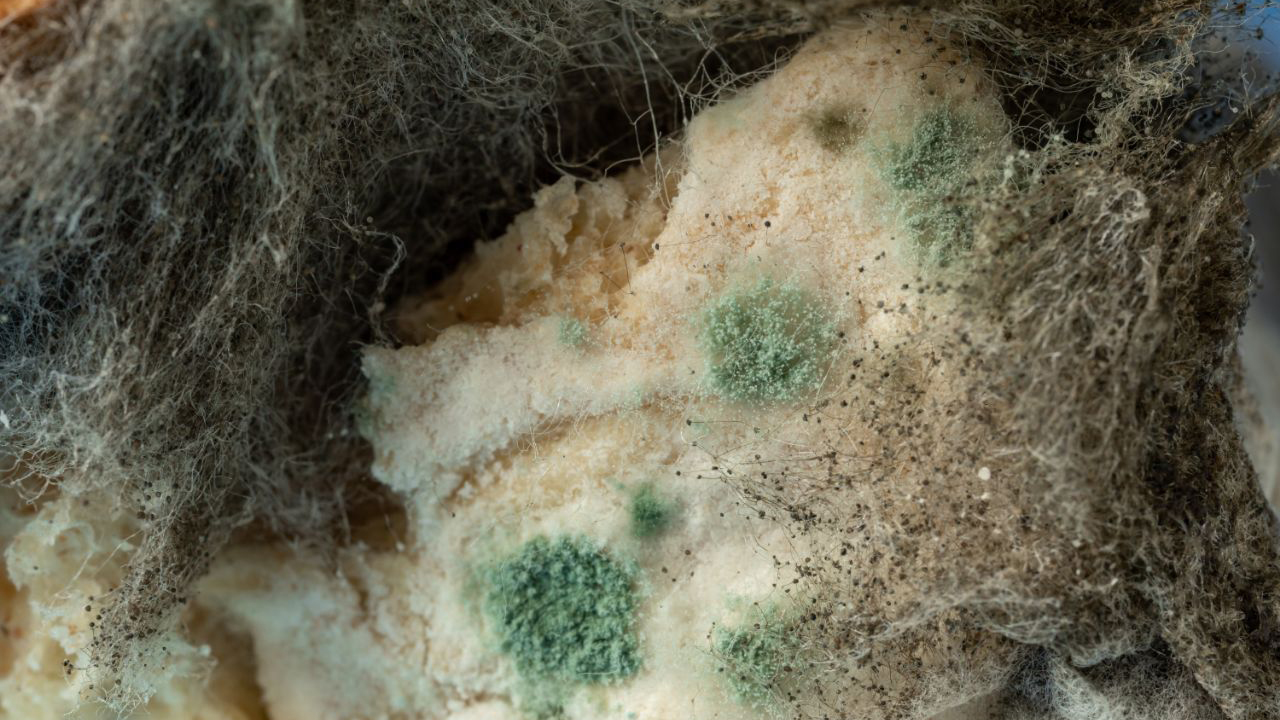
Mold is always unpleasant. It not only destroys the aesthetics of our living spaces but also poses potential health hazards. But before you attempt to get rid of the mold, you need to understand its type and the health risks it may present.
Why? Because different types of toxic mold require specific treatment methods. Also understanding the health risks associated with each type allows you to take appropriate safety precautions before proceeding with mold remediation.
5 Types of Toxic Mold
Below, we’ve listed the 5 most common types of toxic mold you might find in your home, along with their characteristics to help you identify them:
1. Aspergillus
Aspergillus is a genus of mold that often grows on a variety of surfaces, including walls, insulation, and HVAC systems. It has a fuzzy or powdery texture that can appear in green, yellow, or white color.
While some species of Aspergillus are harmless, others can produce mycotoxins that pose health risks, especially to individuals with weakened immune systems.
2. Penicillium
Penicillium is also a type of toxic mold; however, it has many useful properties and has played a big role in the discovery and production of the antibiotic penicillin. In our homes, it’s mostly found in poorly ventilated areas such as basements and bathrooms.
You can easily identify Penicillium by observing its characteristic fuzzy or powdery appearance, typically exhibiting shades of blue-green or bluish-gray.
3. Alternaria
Alternaria thrives in damp environments and is typically found in showers, bathtubs, damp walls, or below the sink. It has a unique velvety texture that appears either dark green or black in color.
When it comes to health risks, Alternaria is considered less allergenic than other molds. However, it might still trigger an allergic reaction, asthma attack, and other respiratory issues.
4. Chaetomium
Chaetomium is another type of mold that is found in water-damaged buildings. However, it appears in areas with chronic moisture, such as basements, crawl spaces, etc. You can identify it by its distinctive cotton-like appearance that is white in color which eventually darkens to become brown or black.
Additionally, Chaetomium mold emits a musty odor and poses health risks, including allergic reactions, skin infections, and respiratory issues.

Chaetomium is another type of mold that is found in water-damaged buildings
5. Stachybotrys

Stachybotrys, also known as black mold, is a dangerous type of mold found in areas with high humidity and moisture levels. It produces mycotoxins, which can cause a number of health problems, including trouble breathing, fatigue, headaches, neurological problems, skin rash, and pulmonary bleeding in children.
This mold is also easy to identify as it has a distinctive dark green or black color with a slimy texture and a strong, musty odor.
Summing Up: Types of Toxic Mold
Understanding and identifying different types of toxic mold is the first step in tackling mold infestations in your home. Once you’ve pinpointed the problem, it’s time to bring in the experts. Just call our 24/7 emergency response service, and our team will be there to help!